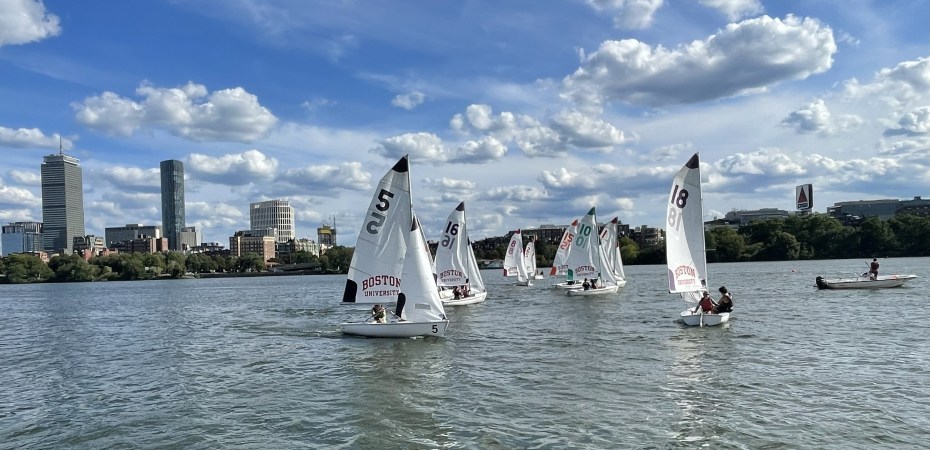
This summer, I volunteered as a “riverboat cruise tour guide” on Boston’s Charles River—though that title sounds more impressive than the reality. I didn’t provide commentary aboard the boat itself. Instead, I accompanied groups of 3-6 visitors from their downtown hostel to the dock, helping them navigate Boston’s old, first-in-the-nation subway system.
We’d board at the historic Boylston T stop and exit at Lechmere for a short walk to the Lechmere Canal. Boylston’s exterior has remained largely unchanged since its 1897 construction, and this stretch is famously the noisiest section of the Green Line. The culprit? A sharp 90-degree turn the train makes from Boylston onto Tremont Street—reportedly one of the sharpest subway turns in North America, according to WBUR.
Once my group settled into their seats on the Charles River Boat Company ferry, I’d sit back and enjoy the views while the paid tour guide shared fascinating historical commentary about the bridges, Harvard, BU, and MIT, punctuated with jokes and sarcasm. This tour is a must for any Boston-area visitor who wants to understand the city’s layout and see landmark buildings from the best vantage point. I took full advantage of my role to snap photos and pick up cool facts about Boston that I should know as an almost 25-year resident of the city.
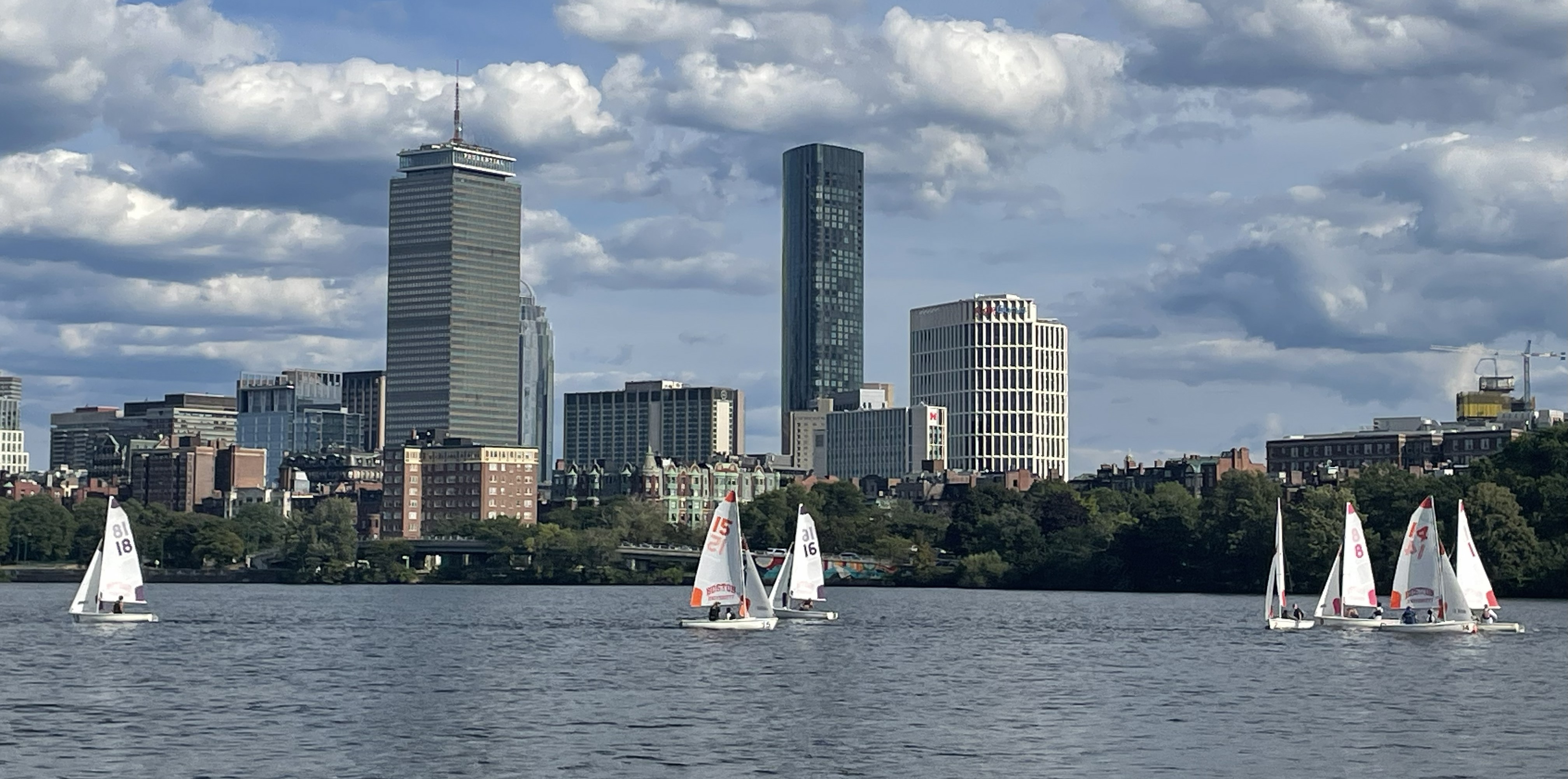
Cool factoids I learned from my tour guide:
- The John Hancock building (tall glass tower in the header) was nicknamed the “Plywood Palace”. When the building was first constructed, structural issues caused its panels of glass to shatter to the ground when wind speeds exceeded 45mph. Empty spaces were filled in with Plywood while engineers determined how to fix it. Eventually, all ten thousand+ panels of glass were replaced.
- The Longfellow Bridge’s (a beautiful bridge to walk or bike over) granite carving of Viking ship prows is based on a belief touted by a Harvard professor in the 19th century that the Viking Leif Erikson sailed into the Charles River in 1000AD. Historians have rejected this claim as they have not been able to find archeological evidence that Vikings made it south of Newfoundland.
By my sixth tour, the script had become predictable, but the people never were. Each week brought new companions and unexpected conversations: one about the Salem witch trials with a recently retired woman from Galveston, Texas. She had been reading books on the topic and was excited about visiting Salem the next day. She was intrigued by the fact that men were also targets of the witch trials. True, I thought, but this was primarily feminicide driven by so many reasons, including fear or distrust of women who deviated from norms.
I had a fascinating conversation about the Israel-Hamas war with an Israeli woman who had just relocated to Canada with her husband and five children, seeking a different future. Her husband, a former member of the IDF, recognized that this war was not a path forward, and the couple did not want their younger children to grow up in an unsafe environment. When her best friends lost limbs in a bombing near their house, they decided they had to leave their beloved country.
This modest volunteer role reminded me of one of my favorite books, Siddhartha by Hermann Hesse. In the novel, Siddhartha abandons both spiritual dogma and capitalistic pursuits to find a middle path as a ferryman’s assistant. Living by the river, he discovers fulfillment and connection. The story arc echoes parts of my own journey. I’ve been progressively stepping away from the pursuit of power and recognition, choosing instead roles that bring me more joy or that allow me to spend more time with family and community.
It’s not an easy path in a society that demands and rewards external achievement. But on those summer evenings, ferrying strangers to a boat on the Charles, I understood a little better what Siddhartha found by the river: the quiet satisfaction of being present, of connecting with others, of watching the water flow by.

